When Club Conflict Becomes Committee Burnout

How unresolved member issues quietly pull committees away from governance, leadership and the future of their club.
By Jacqui McConville | JMX Solutions

Most committee members volunteer to help grow their club – not to spend hours managing interpersonal disputes, emotionally charged complaints or ongoing behaviour concerns.

Yet across community clubs, sport and not-for-profit organisations, many committees are finding themselves consumed by issues that sit well outside their role:

  • parent complaints,
  • member conflict,
  • communication breakdowns,
  • conduct concerns,
  • social media disputes,
  • and difficult conversations no one feels equipped to manage.

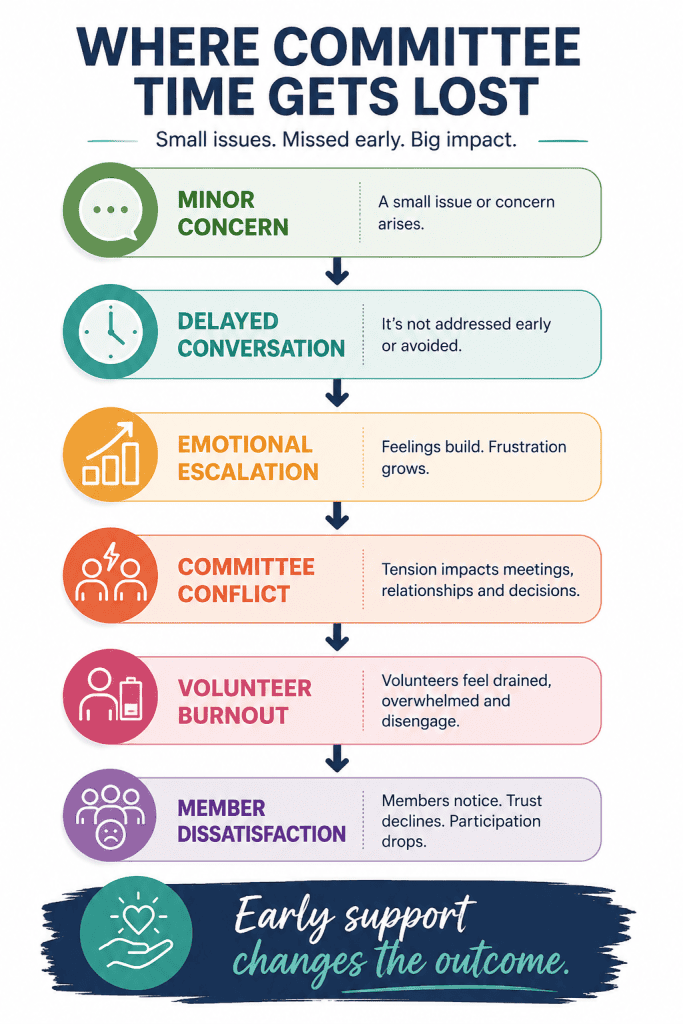
The result isn’t just conflict.

It’s volunteer fatigue, delayed decision-making and committee energy being diverted away from strategy, sustainability and member experience.

“Every unresolved issue competes with the real work of running a club.”


What We’re Seeing Across Clubs

Across many clubs, the same pressure points continue to emerge:

  • Complaints or tensions becoming long email chains
  • Volunteers avoiding difficult conversations
  • Inconsistent complaint handling processes
  • Absence of policies and procedures
  • Parent behaviour escalating
  • Personal relationships influencing decision-making
  • Burnout among secretaries, presidents and volunteers
  • Fear of “getting it wrong” when handling sensitive matters

In many clubs, these issues are not isolated incidents.

They become ongoing drains on volunteer time, emotional energy and leadership capacity. When concerns sit unresolved for too long, minor frustrations can quickly escalate into fractured relationships, formal complaints or broader cultural issues within the club.

Strong Clubs Respond Early

Conflict itself is not unusual.

Healthy clubs will always experience differing opinions, strong personalities and passionate conversations. The difference is how issues are addressed.

Strong clubs create environments where concerns can be raised early (and easily), managed respectfully and resolved consistently before they escalate.

That requires:

  • clear expectations,
  • confident communication,
  • fair processes,
  • and leaders who feel supported when difficult situations arise.

Too often, volunteers inherit difficult situations without the time, tools or confidence to navigate them effectively. Over time, that pressure can impact volunteer retention, committee culture and the overall experience of members.

“The longer issues sit unresolved, the more committee energy they consume.”


Clubs Don’t Need to Handle Everything Alone

Community clubs are increasingly expected to manage complex interpersonal issues with limited time, limited training and volunteer-led governance structures.

For many committees, the challenge is not a lack of care or commitment – it’s a lack of confidence and capacity.

Sometimes the most effective approach is bringing in independent support to:

  • manage complaints objectively,
  • facilitate difficult conversations,
  • support committees through sensitive matters,
  • reduce emotional pressure on volunteers,
  • and allow leaders to refocus on governance, operations and member experience.

This is where JMX Solutions supports clubs through:

  • outsourced complaint management,
  • independent conflict resolution,
  • mediation,
  • governance advisory support,
  • policy and process development,
  • and tailored workshops designed specifically for community organisations.

Independent support can help clubs respond to issues consistently, protect volunteer wellbeing and maintain trust within their membership base – particularly during challenging or emotionally charged situations.

“Strong governance includes knowing when to bring in independent support.”


Building Healthier Club Environments

Having worked across public sector complaints, sporting organisations and community clubs, JMX Solutions understands the unique pressures facing volunteers, committees and club leaders.

When conflict is managed well, clubs don’t just resolve issues – they retain volunteers, strengthen trust and create healthier environments for members, families and communities.

Strong clubs are not defined by the absence of conflict.

They are defined by how confidently and fairly they respond when challenges arise.

Is committee conflict consuming more time than club strategy?

JMX Solutions provides practical, independent support for clubs navigating:

  • complaints,
  • member disputes,
  • volunteer conflict,
  • governance concerns,
  • and difficult conversations.

Book a confidential conversation today. Contact details below.

Related News

When Club Conflict Becomes Committee Burnout How unresolved member issues quietly pull committees away from governance, leadership and the future of their …

Meet the Reward Hospitality Team We are excited to introduce your new dedicated team at Reward Hospitality. Moving forward, Marty Daunt and Barry …

Volunteer workforce stable, but under pressure MEDIA RELEASE – Wednesday 14 May 2026 The Federal Budget offers welcome reforms and initiatives to …

Scroll to Top